ISO 9001:2015 Certified

Feed Additive & Toxin Binder

Sustainable and Cost-Effective Mycotoxin Binder for Livestock and Poultry

Clinoptilolite: Natural Multifunctional Toxin Binder

Clinoptilolite is a natural multifunctional toxin binder that adsorbs free ammonia and harmful heavy metals in the animal digestive tract. Being one of the most effective natural zeolites of the Heulandite group, its highly porous cage framework provides expansive surface area on which chemical reactions and cation exchanges take place.

It has a permanent negative electrical charge giving it a superior Cation Exchange Capacity (CEC). Due to this superior capacity, it captures ammonium ions, toxins, and heavy metals such as Lead (Pb), Cadmium (Cd), Mercury (Hg), and Nickel (Ni).

Selective Polar Binding Affinity While conventional binders act as indiscriminate sponges that absorb vitamins, minerals, and amino acids alongside toxins, Clinoptilolite is a selective polar binder. With pores sized at 4 Ångström (0.4 nm), it strictly attracts small positively charged toxin molecules while completely sparing large nutrient molecules like vitamins, antibiotics, and proteins.
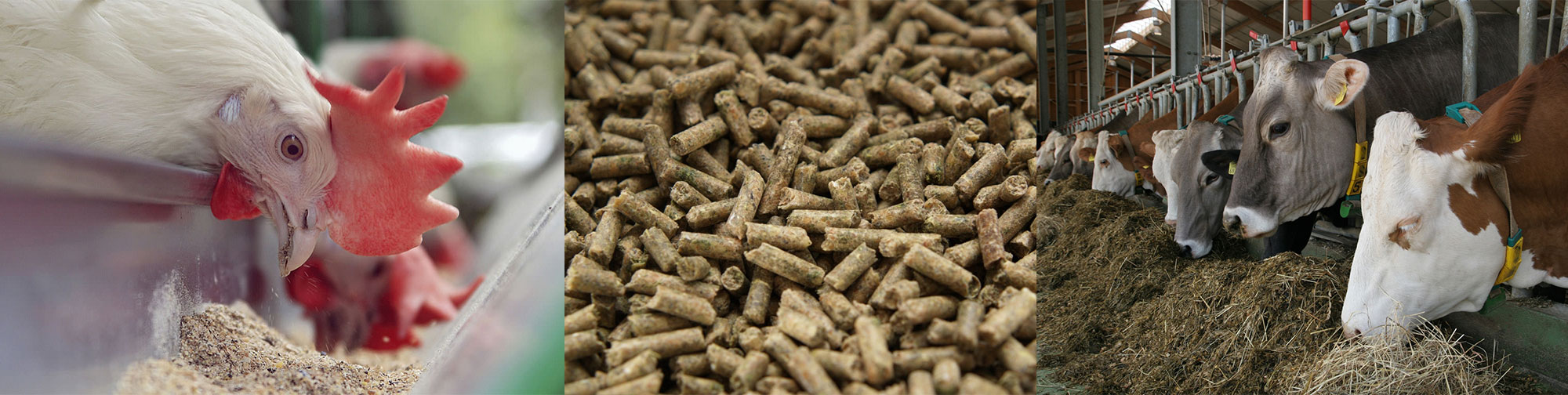
Livestock and Poultry Nutrition

Key Benefits for Ruminants, Poultry & Swine

Feed Durability & Anti-Caking

  • Binds mycotoxins, endotoxins, and heavy metals (especially Aflatoxin B1).
  • Acts as an excellent anti-caking agent, keeping feed free-flowing in silos.
  • Reduces agglomeration during mixing, improving uniform ingredient dispersion.
  • Removes excess moisture and extends pelleted feed shelf-life.

Economics & Farm ROI

  • Delivers outstanding return on investment at very low inclusion rates (1% - 2%).
  • Reduces animal mortality, veterinary expenses, and mycotoxicosis losses.
  • Produces dry, valuable, nutrient-rich manure for agricultural fertilizer.
  • Easily replaces sodium bentonite or artificial rumen buffers.

Safer Urea-Containing Diets

  • Reduces urea toxicity in dairy and beef cattle rations.
  • Slows the release of ammonia in the rumen, increasing microbial protein synthesis.
  • Improves feed conversion ratio (FCR) and milk yield.
  • Buffers rumen pH, preventing subacute ruminal acidosis (SARA).

Recommended Particle Sizes for Feed Formulations

10 Micron / 25 Micron:

Ultra-fine activated powder for mineral premixes, baby animal diets, and high-potency toxin binder blends.

50 Micron / 100 Micron:

Standard feed mill additive for commercial compound poultry, swine, and dairy feed pellets.

200 – 400 Micron:

Cost-effective mash feed and cattle concentrate additive with outstanding flowability.